
Budget analyses serve as a tool for examining the processes of collecting and spending public resources, making it possible to obtain information on planned activities and the results of their implementation, as well as to interpret budgetary data.
Budget analyses and their applications are diverse. They help address challenges that arise during the implementation of programs, serve as a foundation and a source of information for their improvement, facilitates public oversight and the monitoring of budget expenditures, and foster interaction between the public and government authorities, and so on.
Budget analyses can be conducted in different directions and from different perspectives, depending on the objectives underlying them.
Budget analyses can relate to all stages of the budget process, focusing on a specific issue in each case and presenting information relevant to that particular stage. For example, at the initial stage of budget preparation, based on the Budget Message, it is possible to analyze and present the main directions of budget policy, budget revenue forecasts, the potential impact of the budget on different social groups, conduct comparative analyses of key budget indicators, and so on.
It is important to know:
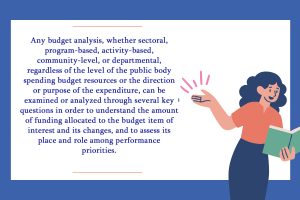
Information from the “Practical Guide to Budget Analysis and Monitoring for CSOs,” produced by the Economic Development and Research Center (EDRC).