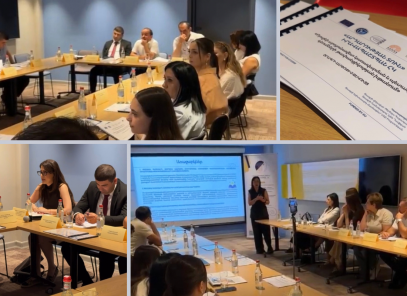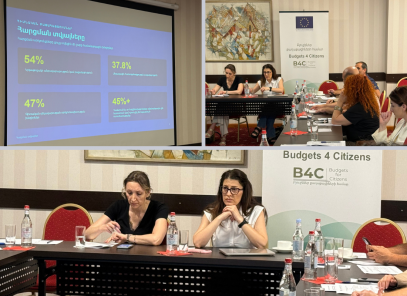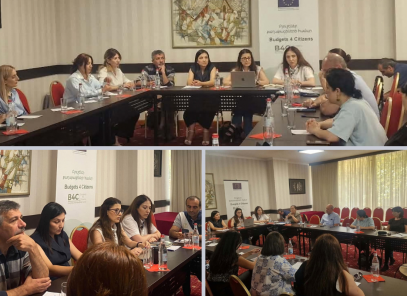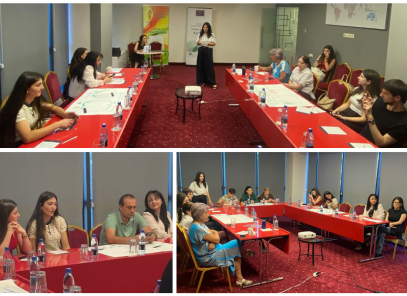
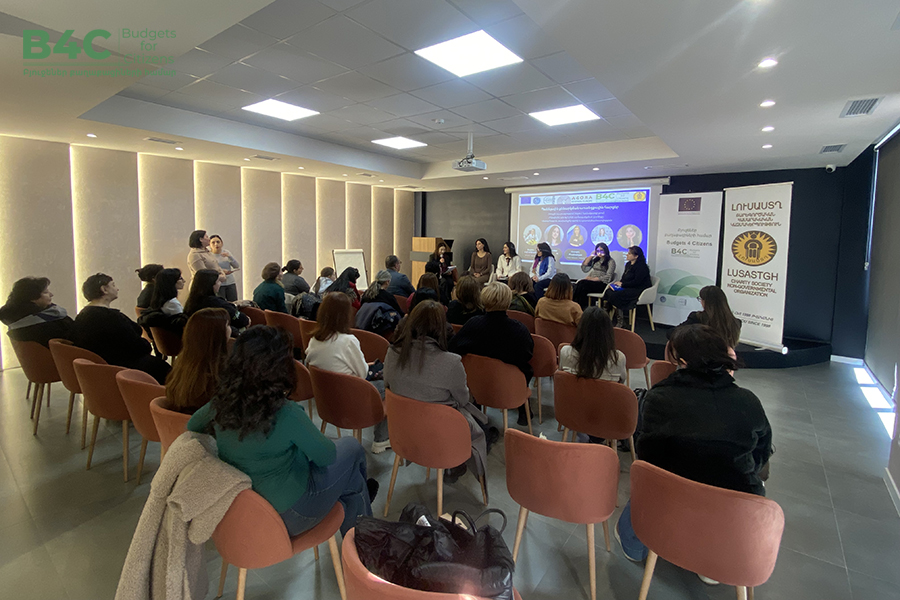
A panel discussion on the “Unified Response System for Inclusive Education” organized by the “Lusastgh” NGO was held in Vanadzor on 12 January, 2026.
The discussion was organized within the framework of the “Universal Inclusion 2: From Budget to Policy” project which Lusastgh NGO was implementing through a sub-grant provided in the scope of the European Union supported “Budgets for Citizens” Action.
Representatives of state institutions, experts from international organizations, heads of educational institutions, specialists from pedagogical-psychological support centers, NGO representatives, and parents attended the discussion. The discussion held in a really constructive atmosphere, where the participants expressed different and sometimes contradictory opinions. This once again demonstrated the multifaceted nature of the issue and the diversity of approaches in the field.
Ms Styuzanna Soghomonyan, representative of the Armenian Lawyers’ Association and the “Budgets for Citizens” action welcomed the participants. She presented the main results of the work carried out within the program, emphasizing its role in enhancing the budgetary literacy of civil society organizations and young professionals, as well as in developing analytical, participatory, and monitoring skills.
During the discussion, participants addressed the question of where the “silence” of the inclusive education system begins and who should be the primary responsible party for the response. Some emphasized the role of schools and pedagogical-psychological centers, while others pointed to the responsibility of state institutions or the need for an independent monitoring mechanism. Despite differing positions, most participants agreed that existing mechanisms fail to provide sufficient and systematic response and need improvement.
One of the most touching moments of the discussion was the parents’ speech. They noted that in the process of inclusive education they often face the lack of information, delayed responses, and unclear accountability. According to them, the absence of a unified and accessible feedback tool both, complicates problem-solving and deepens distrust toward the system.
“The most painful thing for us here is rather the silence and not the problem itself. The ttrust in the system simply collapses when you do not know who to approach, who is responsible, and when you will get a response,” one of the participating parents said.
The debate over the need for a feedback tool revealed a systemic contradiction between state institutions and civil society. While state representatives considered existing mechanisms sufficient, NGOs and parents viewed them as inadequate, especially in terms of ensuring timely, clear, and effective responses. Parents and NGO representatives stressed that developing a unified feedback tool should become a priority for early response, prevention, and building trust.
All recommendations and observations voiced during the panel discussion will be summarized and included in the final version of a policy message to be presented to the Ministry of Education, Science, Culture and Sports of Armenia and other stakeholders.
The “Lusastgh”NGO plans to continue cooperation with various actors in the field to contribute to the creation of an effective, transparent, and trust-building unified mechanism for response and feedback in the field of inclusive education.
This publication has been developed with the financial support of the European Union, within the framework of a sub-grant provided under the “Budgets for Citizens” project implemented by the Armenian Lawyers’ Association, in cooperation with partners “Economic Development and Research Center” (EDRC) NGO and “Agora Central Europe” NGO (Czech Republic). It has been implemented by “Lusastgh” NGO within the framework of the “Universal Inclusion 2: From Budget to Policy” project. The “Lusastgh” NGO is responsible for the content, and it does not necessarily reflect the views of the European Union.